The Best Furniture Arrangement for Small Living Rooms
Master the geometry of small living spaces. Learn the best furniture arrangement for small living rooms to improve flow, function, and comfort.
Tbfit 65" W Loveseat Sofa, Mid Century Modern Decor Love Seat Couches for Living Room, Button Tufted Upholstered Small Couch for Bedroom, Solid and Easy to Install Love Seats Furniture, Beige
Tbfit
As a veteran contractor and seasoned remodeler who has torn down walls in countless cramped city apartments, I can tell you this: you probably don’t need an expensive room addition. The problem isn’t your square footage; it’s how you’re using it. Most homeowners treat a small living room like a puzzle where every piece has to touch the edges. They shove sofas against walls, cram oversized coffee tables into the center, and end up with a room that feels like a poorly designed waiting area.
Arranging furniture in a small living room isn’t about fitting as many items as possible. It is about creating zones, managing traffic flow, and using vertical space. Let’s strip away the fluff and look at how you should actually be laying out a compact space.
1. Float Your Furniture
It seems counterintuitive, but pushing all your furniture against the walls makes a small room feel dead and cavernous, while completely ruining conversational intimacy.
The “Wall-Hugger” Trap: Pushing furniture flush against the wall visually reinforces the tight boundaries of the room. Pulling pieces even three to four inches away from the wall creates a shadow line that gives the illusion of depth.
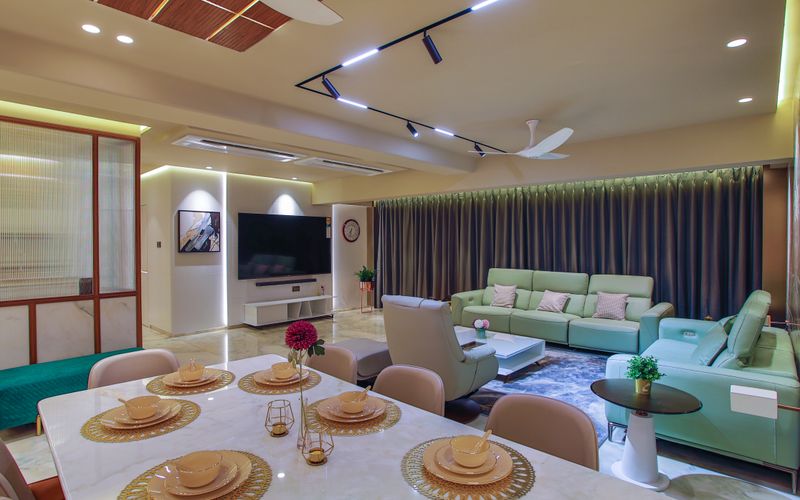
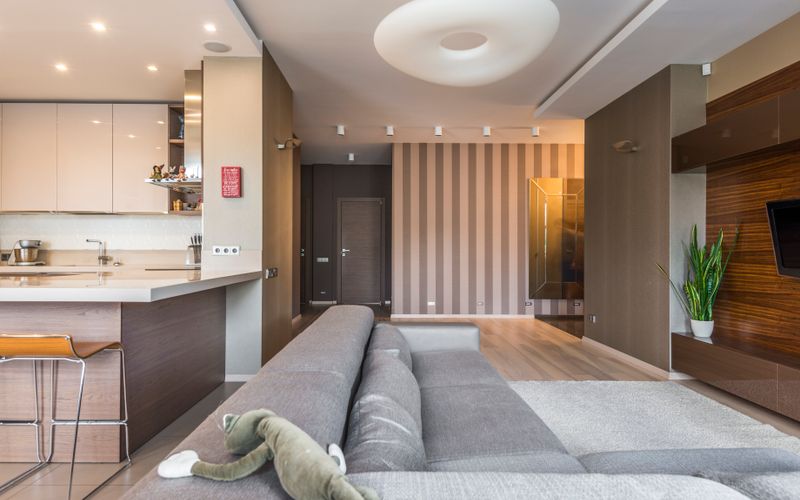
Instead, pull your sofa into the room. If your living room is part of an open floor plan, use the back of your sofa to define the boundary between the living area and the dining or kitchen space. By floating your seating, you establish a dedicated zone that feels intentional, rather than a leftover space holding your couch.
2. Respect the Traffic Flow
A room is a functional machine first, a visual statement second. If you have to turn sideways to shimmy past an armchair to get to the front door, your layout has failed.
Map out the primary pathways. Typically, you need at least 30 to 36 inches of clearance for major walkways and 14 to 18 inches between the sofa and the coffee table. In a small living room, you might have to compromise, but never drop below 24 inches for a walkway. If a traditional coffee table blocks the path, ditch it for nesting tables or a narrow ottoman.
3. Anchor with a Properly Sized Rug
One of the most common mistakes I see is the “postage stamp” rug. A tiny rug floating in the middle of a small room visually chops the floor plan into even smaller pieces.
You need a rug large enough so that at least the front legs of all your major seating pieces (sofa and accent chairs) rest on it. This visually binds the furniture together into a cohesive unit, rather than leaving them looking like isolated islands.
4. Think Vertical and Multi-Functional
When floor space is scarce, you have to build upward. Standard bookshelves take up too much footprint. Instead, install floating shelves high up on the wall to draw the eye upward, which makes the ceiling feel higher.
Similarly, demand more from every piece of furniture you own. If a piece doesn’t serve two purposes, it might not belong in a small room. An ottoman that doubles as hidden storage is far superior to a fixed coffee table.
Speaking of smart, multi-functional pieces that can anchor a small space without overwhelming it, integrating flexible seating or modular units can make or break your layout.
5. Balance Visual Weight
Visual weight is just as important as physical dimensions. A massive, overstuffed sectional covered in dark fabric has a heavy visual weight—it will suck the air out of a small room.
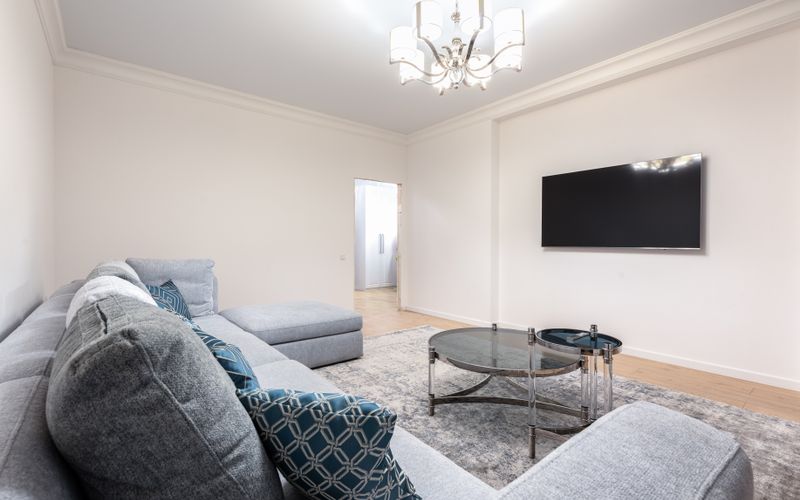
Opt for furniture with exposed legs rather than skirted bases. Being able to see the floor underneath a sofa or chair tricks the brain into perceiving more floor space. Choose armless chairs or chairs with slender, open frames instead of bulky club chairs. Clear acrylic or glass tables also reduce visual clutter.
The Final Blueprint
Here is a foolproof starter arrangement for a typical small, rectangular living room:
- Place a moderately sized (e.g., 72-inch to 84-inch) sofa on the longest unbroken wall, but pull it out a few inches.
- Put a narrow console table behind the sofa if space permits—this gives you a spot for lighting without needing floor lamps.
- Position two visually light accent chairs opposite the sofa, angled slightly toward each other to encourage conversation.
- Anchor the setup with an 8x10 rug.
- Swap the bulky coffee table for two small, easily movable nesting tables or a slim, round ottoman.
Follow these rules, respect the geometry of the room, and stop fighting your square footage.
Tbfit 65" W Loveseat Sofa, Mid Century Modern Decor Love Seat Couches for Living Room, Button Tufted Upholstered Small Couch for Bedroom, Solid and Easy to Install Love Seats Furniture, Beige
Tbfit
- SPACIOUS AND COMFORTABLE: Our loveseat will be a favorite spot for leisure in your home. It is 65.2 inches wide and spac…
- STURDY AND DURABLE : You don’t have to worry about its durability! Our whole small sofa with a sturdy frame and high bou…
- WIDELY SCENES: Why not consider adding a stylish small couch for bedroom, living room, apartment, or loft? The mini couc…
- TIMELESS APPEAL: Stylish tufted linen upholstery with a mid-century low-profile design brightens your whole home with mo…
As an Amazon Associate we earn from qualifying purchases.
Frequently Asked Questions
Q: Should a sofa go against the wall in a small living room?
A: Usually not. Pulling the sofa a few inches off the wall — or fully floating it to divide an open-plan space — creates a shadow line and depth that makes the room feel larger, not smaller.
Q: How much walkway clearance do I need?
A: Aim for 30 to 36 inches on major walkways and 14 to 18 inches between the sofa and coffee table. In a tight room, never drop below 24 inches for a path people actually use.
Q: What size rug works in a small living room?
A: Large enough that at least the front legs of the sofa and accent chairs sit on it. A too-small rug chops the floor into pieces; an 8x10 often reads better in a small room than a 5x7.
Q: What furniture makes a small room feel bigger?
A: Pieces with exposed legs, armless or open-frame chairs, and clear acrylic or glass tables. Being able to see the floor underneath a piece tricks the eye into perceiving more space.