How to Clean and Care for Hardwood Floors Without Damaging the Finish
A veteran floor refinisher shares the exact step-by-step methods to clean and maintain hardwood floors without ruining the finish or warping the wood.
Bayes High Performance Teak Cleaner & Restorer - Cleans, Shines, and Protects - Maintains Fine Teak and Restores Neglected Teak - 16 oz, 2 Pack
Bayes
As someone who has spent two decades sanding down perfectly good hardwood floors because a homeowner ruined the topcoat with bad cleaning habits, let me tell you a harsh truth: your cleaning routine is probably doing more harm than good.
Most people treat their expensive hardwood like it’s linoleum. They douse it in water, scrub it with abrasive pads, and spray on off-the-shelf “glow” products that leave a sticky, dirt-trapping acrylic residue. Caring for hardwood without causing damage isn’t about scrubbing harder; it’s about understanding the chemistry of your floor’s finish and using the least invasive methods possible.
Here is the exact, professional-grade approach to keeping your floors pristine without stripping the polyurethane or warping the boards.
Step 1: Master the Dry Clean
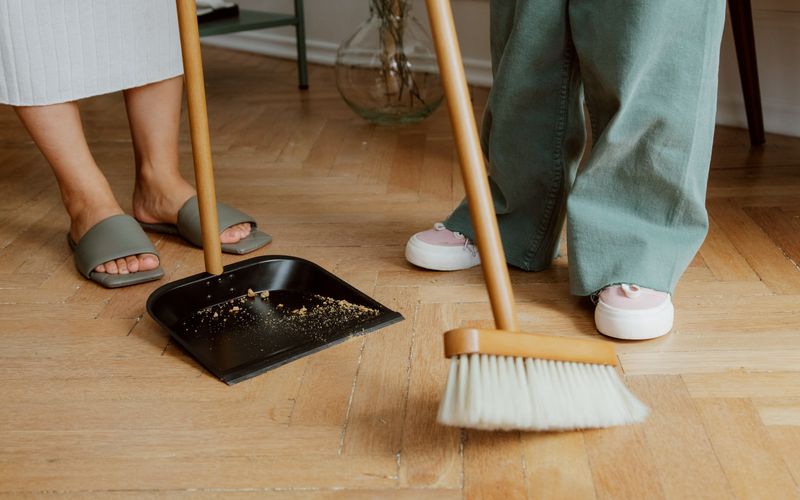
The single biggest threat to your hardwood floor isn’t spills—it’s grit. Sand, dirt, and microscopic debris act like sandpaper under your shoes. Every time you walk across a dirty floor, you are grinding away the protective finish.
Your first line of defense is a high-quality microfiber dust mop or a vacuum. However, not all vacuums are safe for wood.
Sweep or vacuum high-traffic areas daily, and the entire floor at least twice a week. If you remove the grit, you rarely have to wet-clean.
Step 2: The Damp Mop Protocol
When the floor actually gets sticky or visibly soiled, you need to use moisture. Notice I said moisture, not water. Standing water is the enemy of wood. It seeps into the seams, swells the edges of the boards (a condition known as cupping), and turns the finish cloudy.
- Choose the Right Cleaner: Avoid anything with wax, oil, ammonia, or high acidity (like heavy vinegar solutions). These will degrade a modern polyurethane finish. Stick to a pH-neutral hardwood floor cleaner.
- Mist, Don’t Pour: Lightly mist the cleaner directly onto a microfiber mop pad—not onto the floor itself. The pad should be barely damp.
- Wipe with the Grain: Move the mop in the direction of the wood grain to prevent streaking and pull dirt out of the micro-bevels between the boards.
- Immediate Drying: The floor should dry within 60 seconds of mopping. If it stays wet longer, you are using too much liquid.
Step 3: Tackling Exotic Woods and Weathered Surfaces
Standard polyurethane-coated oak or maple is relatively straightforward, but what if you have an unsealed exotic wood floor, an indoor/outdoor transition space, or interior teak details?
Unsealed or oiled woods require an entirely different approach because they don’t have a hard plastic-like shell protecting them. Over time, these woods can oxidize, turn gray, or absorb deep stains. If you try to clean these with standard surface cleaners, you’ll just push the dirt deeper into the grain.
For restoring these types of fine woods, you need a specialized cleaner that can pull out dirt, mildew, and weathering signs without raising the wood grain or requiring heavy sanding. This is a critical prep step before you apply a fresh coat of teak or tung oil.
Bayes High Performance Teak Cleaner & Restorer - Cleans, Shines, and Protects - Maintains Fine Teak and Restores Neglected Teak - 16 oz, 2 Pack
Bayes
- The Bayes Teak cleaning solution deeply penetrates and protects the wood from getting dry, cracked, stained, spotty or g…
- Easy maintenance for Fine Teak Furniture. Even old and neglected teak can be beautifully restored back to a beautiful fo…
- Protect Your Investment. Oil based formula cleans, shines & protects teak & wood furniture, fixtures and surfaces, easil…
- Enriched with lemon and essential oils, which naturally nourish, protect and seal the surface against moisture, UV light…
As an Amazon Associate we earn from qualifying purchases.
When using a heavy-duty wood restorer on unsealed floors:
- Test First: Always apply the product in an inconspicuous corner to gauge how the wood reacts.
- Let the Chemistry Work: Apply the cleaner and let it sit for the manufacturer’s recommended time. Don’t aggressively scrub with a stiff brush, or you’ll scratch the soft wood fibers.
- Rinse Cautiously: Use a damp cloth to neutralize and lift the cleaner away. Never flood the floor to rinse it.
Preventative Maintenance: Stop Damage Before It Starts
Cleaning is only half the battle. If you want to avoid calling me for a $3,000 refinishing job, implement these preventative measures immediately:
- Felt Pads on Everything: Every chair leg, sofa, and table needs a heavy-duty felt pad. Replace them every six months, as they compress and collect grit over time.
- Strategic Rug Placement: Place high-quality, breathable mats at every exterior door. 80% of the dirt in your home walks in on the bottom of shoes.
- Watch Your Pets: Keep dog nails trimmed. A 60-pound dog rounding a corner on hardwood acts like a set of ice skates on the finish.
Hardwood floors are meant to last a lifetime, and with a gentle, dry-first approach, they will. Step away from the heavy mop bucket, put down the harsh chemicals, and let the wood breathe.
Frequently Asked Questions
Q: Can I clean hardwood floors with vinegar and water?
A: Avoid it. Vinegar is acidic and dulls the polyurethane finish over time. Use a pH-neutral hardwood floor cleaner instead, and keep the mop barely damp.
Q: How wet should my mop be?
A: Barely damp — mist the cleaner onto the pad, not the floor. The floor should be dry within about 60 seconds. Standing water seeps into the seams and cups the boards.
Q: Why does my hardwood floor look cloudy after mopping?
A: Usually residue from a wax, oil, or “glow” product, or too much water. Switch to a pH-neutral cleaner and wipe with the grain, and the cloudiness will fade.
Q: Do I need felt pads on my furniture?
A: Yes. Chair legs, sofas, and tables all need felt pads, replaced every six months. Bare legs plus grit act like sandpaper and scratch straight through the finish.